

In recent years, a dangerous synthetic drug known as K2/Spice has emerged as a significant concern in communities worldwide. Also referred to as synthetic cannabinoids (SCBs) or “fake weed,” K2 is a man-made substance designed to mimic the effects of marijuana. While marijuana’s growing acceptance and legalization may lead some to perceive it as harmless, the reality is far more complex. Synthetic cannabinoids like K2, often marketed as a legal alternative related to marijuana, pose serious health risks despite their availability and are far from harmless.
K2, also known as Spice, is a synthetic drug that consists of dried plant material sprayed with synthetic chemicals. These chemicals are called cannabinoids because they act on the same brain cell receptors as tetrahydrocannabinol (THC), the main active ingredient in marijuana. However, the chemical composition of K2 can vary widely, making it a highly unpredictable and dangerous substance.
Contrary to popular belief, K2 is far from a safe substitute for marijuana. K2 is highly addictive, and regular use can lead to dependence. Withdrawal symptoms, such as cravings, irritability, and insomnia, can occur when attempting to quit. The synthetic chemicals used in K2 can have severe and unpredictable effects on the body and mind.
According to Gaudenzia’s Corporate Medical Director, Dr. Philip Moore, “SCBs can be 100 times stronger than marijuana with effects that are much worse since they are a lab-made substance and therefore make it difficult to know exactly what you’re getting. SCBs can affect many parts of your body including your brain, heart, muscles, lungs, kidneys, and stomach.”
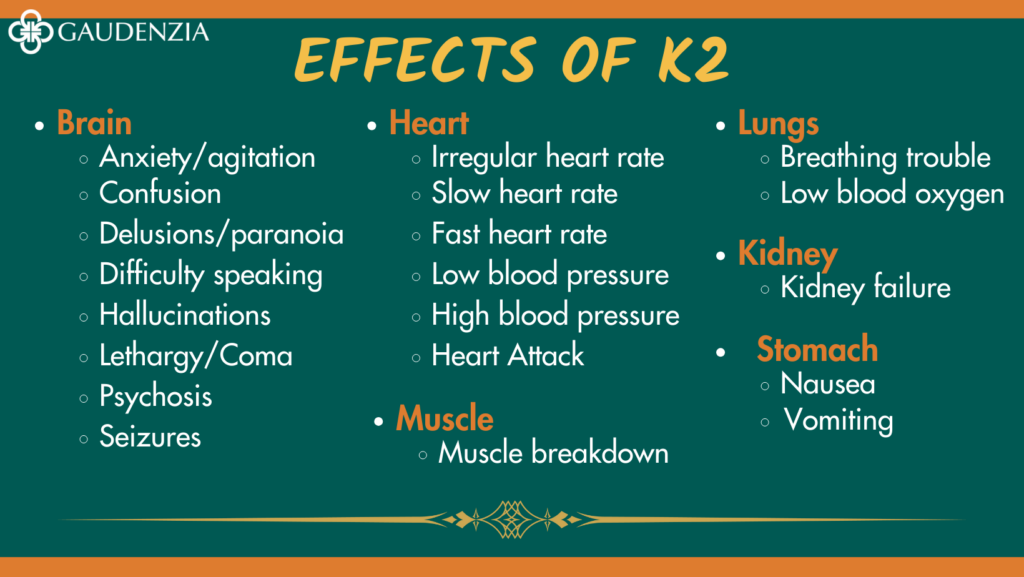
K2 can cause a rapid increase in heart rate and blood pressure, leading to cardiovascular problems and potential heart attacks. When inhaled, K2 smoke can cause respiratory distress, including difficulty breathing, chest pain, and lung damage. K2 has been linked to severe anxiety, paranoia, hallucinations, and even psychosis. These mental health effects can be long-lasting and have a significant impact on an individual’s well-being.
“I had no idea what K2 was doing to my body,” shares April R., a 42-year-old mom of five in Philadelphia who is currently in recovery. “Detoxing from K2 was unbelievably difficult and at times, I questioned if I could make it through. Thanks to Gaudenzia’s staff and the treatment offered, I was able to get through it and have now been sober for almost three years. I thought K2 was no big deal—and I was wrong. K2 is a serious drug and, for me, was just as addictive as crack and heroin—it really is dangerous.”
According to the CDC, the federal government has banned many specific synthetic cannabinoids. State and local governments have passed their own laws targeting others. However, federal and state laws have only banned general categories of ingredients, rather than specific chemicals which makes it easier for manufacturers to modify the chemical structure slightly to circumvent these laws.
K2, in particular, has gained popularity due to its easy accessibility. It is often marketed as a legal alternative to marijuana since the chemical compounds used in K2 are not specifically listed as controlled substances. K2/Spice poses significant dangers and health risks. Its unpredictable chemical composition and severe side effects make it a substance that should be avoided at all costs.
Common Questions About K2
Is K2 a Schedule I substance?
K2 and other synthetic cannabinoids are classified as Schedule I substances under the Controlled Substances Act in the United States. This classification puts them in the same category as heroin and LSD, reflecting their high potential for abuse and lack of accepted medical use.
How long do K2 withdrawal symptoms last?
The journey through K2 withdrawal typically spans about two weeks, though this timeline can vary significantly based on how long and how frequently someone has used the drug. Individuals often experience a range of challenging symptoms, including severe anxiety, irritability, mood swings, and intense cravings. Physical symptoms can be equally severe, manifesting as rapid heartbeat, chest pain, nausea, and difficulty sleeping. In more serious cases, individuals may experience seizures, highlighting the critical importance of seeking professional medical supervision during withdrawal.
What is the prevalence rate of synthetic cannabinoid use?
While synthetic cannabinoid use affects a relatively small portion of the population, recent statistics paint a concerning picture. Data shows an alarming 50% increase in K2 use across the United States, rising from 0.17% in 2021 to 0.26% in 2023. According to a May 2025 scientific market report and analysis, synthetic cannabinoids represent one of the fastest-growing classes of new psychoactive substances. This upward trend signals a growing public health concern that demands immediate attention.
How are K2 overdoses treated?
Unlike opioid overdoses, naloxone (Narcan) does not reverse synthetic cannabinoid toxicity, underscoring that such cases can be more complex than opioid-related crises. Treatment for a K2 overdose requires immediate emergency medical attention, where healthcare providers can manage symptoms and provide supportive care. The unpredictable nature of synthetic cannabinoids means that each case may present different challenges requiring specialized medical intervention.
Are there any FDA-approved medications for synthetic cannabinoid addiction?
Currently, the FDA has not approved any specific medications for treating K2 addiction or cannabis use disorder. However, professional treatment centers like Gaudenzia offer comprehensive recovery programs that combine medical supervision, counseling, and support services to help individuals overcome synthetic cannabinoid addiction.
What happens during medical detoxification from K2?
Medical detox programs for K2 require careful oversight from trained healthcare professionals in a specialized treatment setting. During this process, medical professionals monitor vital signs 24/7 and manage withdrawal syndrome through appropriate medical interventions. Throughout the process, medical professionals carefully balance physical comfort with safety, ensuring that individuals can safely eliminate K2 from their system while minimizing health risks.
How do medical professionals monitor K2 withdrawal syndrome?
During K2 withdrawal, medical professionals employ a systematic approach to monitoring and managing symptoms. This includes regular vital sign checks, continuous assessment of withdrawal severity, and careful documentation of physical and psychological symptoms. The clinical care team uses standardized assessment tools to track progress and adjust treatment as needed. Medication-assisted detox may be implemented to manage specific symptoms, with medical staff carefully monitoring the effectiveness of interventions. This comprehensive monitoring ensures that any complications can be addressed promptly and safely.
Can K2 cause permanent organ damage?
The impact of K2 on vital organs can be severe and long-lasting. Regular use can cause significant liver damage, as the synthetic chemicals strain the liver’s ability to filter toxins from the body. Additionally, K2 use has been linked to acute kidney injury, with some cases requiring emergency medical intervention. The unpredictable nature of K2’s chemical composition makes it particularly dangerous, as different batches can contain varying toxic substances that affect multiple organ systems differently. Medical professionals at Gaudenzia have observed cases where long-term K2 use has resulted in persistent health complications requiring ongoing medical management.
What types of treatment are available for K2 addiction?
Treatment for K2 addiction typically involves a comprehensive approach combining various therapeutic methods. Behavioral therapies, including Cognitive Behavioral Therapy (CBT) and Motivational Enhancement Therapy, form the foundation of most treatment programs. These are complemented by holistic care approaches such as stress management techniques, nutrition counseling, and mindfulness practices. Addiction professionals work closely with each individual to develop personalized treatment plans that address both the physical and psychological aspects of K2 dependency. Group therapy and family counseling often play crucial roles in the recovery process.
What support services are available for individuals recovering from K2 addiction?
Recovery from K2 addiction extends beyond medical treatment. Comprehensive support services are essential for long-term success. Professional treatment centers like Gaudenzia offer a range of services, including legal advocacy, substance use disorder care coordination, and re-entry support programs. These services help address the practical challenges that can impact recovery, such as housing needs and job readiness. Individuals can also access support for legal matters, including diversion programs and expungement assistance, promoting a fresh start in recovery. This comprehensive approach helps ensure that people receive support for both their immediate recovery needs and their long-term success.
What are the long-term psychological effects of K2 use?
Long-term K2 use can result in significant psychological changes that may persist even after stopping the drug. Users often experience persistent anxiety, depression, and cognitive difficulties that can impact daily functioning. Some individuals report ongoing issues with memory, concentration, and decision-making abilities. In severe cases, K2 use has been linked to the development of chronic psychiatric conditions, including persistent psychosis and mood disorders. Early intervention and professional treatment are crucial in addressing these psychological effects and preventing their progression into more serious mental health concerns.
If you or someone you love needs help with addiction treatment, please contact our Treatment and Referral HelpLine at 833.976.HELP (4357) or email helpline@gaudenzia.org today.
We’re on social media! Follow Gaudenzia on Instagram, X, Facebook and LinkedIn — and don’t forget to subscribe to our YouTube channel for updates and educational content.