Trauma-Informed. Skills-Driven. Medically Integrated Whole-Person Care.
At Gaudenzia, recovery means treating the whole person—mind, body, relationships, and community—using evidence-based clinical care, medical best practices, and coordinated recovery support.
Right Level. Right Time. Right Support—from stabilization to long-term recovery.
Our Integrated Treatment Model — At a Glance
At Gaudenzia, we use an integrated treatment model designed to meet people where they are and support long-term recovery—not just short-term stabilization.
Our approach brings together medical care, evidence-based clinical treatment, recovery support, and whole-person wellness to address the full range of needs individuals face during and after treatment.
Care is trauma-informed, skills-driven, medically integrated, and delivered across a full continuum—from withdrawal management through community reintegration and aftercare.
This model ensures that every person receives the right care, at the right level, at the right time, supported by teams who work together—not in silos.
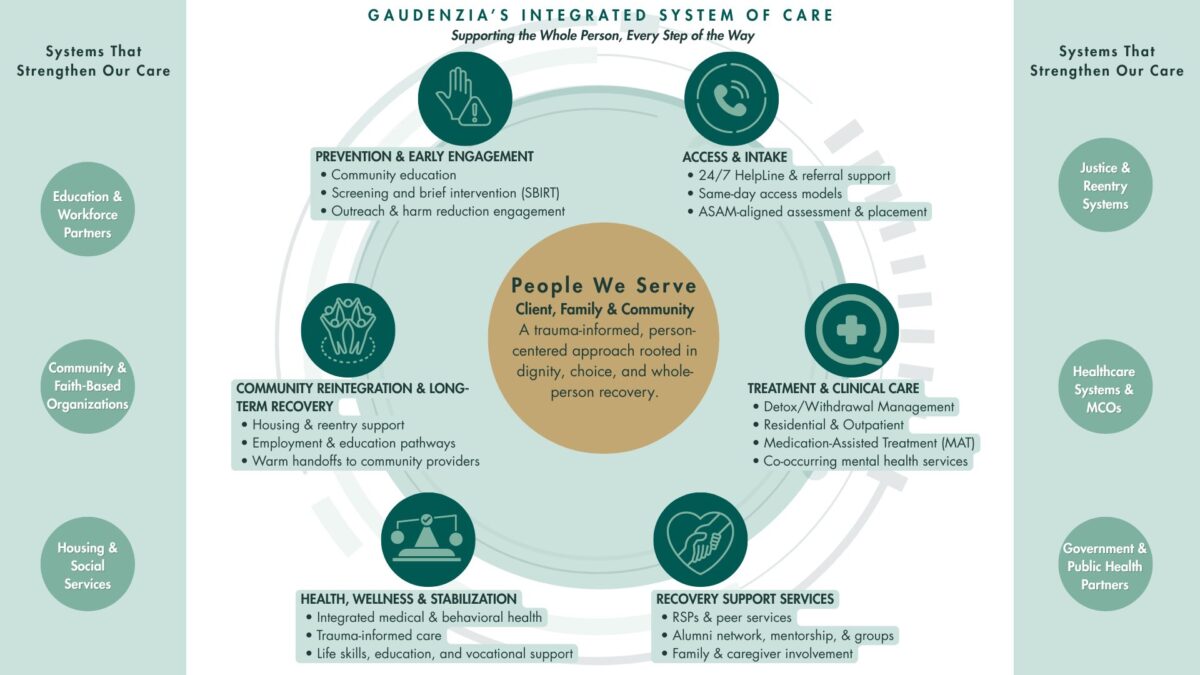
Gaudenzia’s System of Care
Recovery is not linear. Gaudenzia’s System of Care ensures individuals can enter treatment at any point and move forward, step up, step down, or re-enter care without shame or disruption—based on need, readiness, and safety.
From prevention and access, to stabilization, treatment, aftercare, and long-term recovery supports, care is continuous, coordinated, and responsive to changing needs. Strong transitions and aftercare planning help individuals maintain progress beyond treatment and remain connected to ongoing support.
Whole-Person Integrated Care
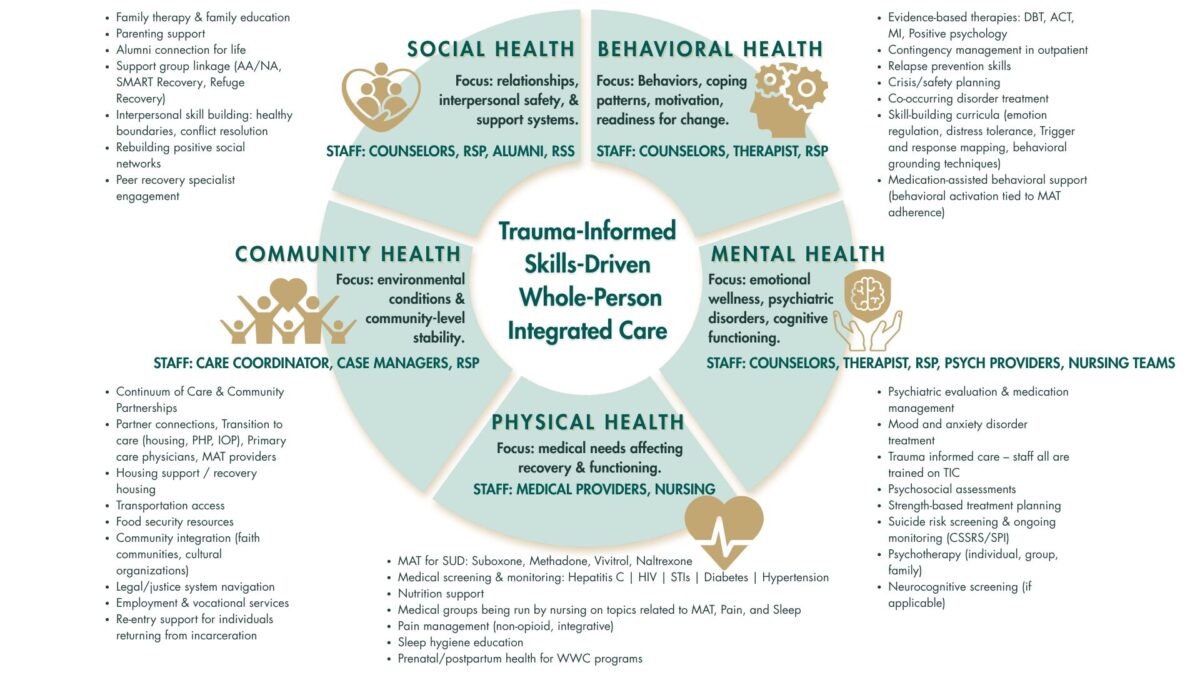
Within every level of care, Gaudenzia delivers whole-person treatment that addresses the full range of factors influencing recovery. Recovery doesn’t happen in one place—or through one service alone.
Gaudenzia’s Whole-Person Integrated Care Model reflects how real recovery works by addressing five interconnected areas of health:
- Behavioral Health – Skills to manage behaviors, triggers, and coping patterns
- Mental Health – Emotional wellness, psychiatric care, and trauma-informed support
- Physical Health – Medical stabilization, medication-assisted treatment (MAT), sleep, nutrition, and wellness
- Social Health – Family support, peer connection, and interpersonal safety
- Community Health – Housing, employment, legal support, and re-entry services
Each area is supported by coordinated clinical, medical, and recovery teams working together around one mission: helping people heal, rebuild, and thrive.
How We Deliver Care
Delivering integrated care requires both compassion and structure. Gaudenzia’s model combines clinical excellence with operational rigor to ensure care is consistent and effective across programs and regions.
Medical Excellence
Medication-Assisted Treatment (MAT) and evidence-based medical care are fully integrated across levels of care to support stabilization, reduce cravings, and address co-occurring health needs. Clinical decisions are guided by assessment, data, and patient outcomes to ensure the right care at the right time.
Evidence-Based, Skills-Driven Treatment
Our clinical teams use proven approaches—such as Motivational Interviewing (MI), Dialectical Behavior Therapy (DBT), Acceptance and Commitment Therapy (ACT), and strength-based therapies—to help individuals build practical skills that support long-term recovery.
Whole-Person Wellness & Connection
Recovery is supported through physical wellness, family engagement, peer support, alumni connection, and community reintegration —helping individuals sustain progress beyond treatment..
Leadership Perspective
“Great care doesn’t live in absolutes—it lives in the gray. Our integrated model honors our history while embracing the science, empathy, and adaptability recovery demands today.”
— Dr. Deja Gilbert, President & CEO
“This model empowers teams to balance structure and compassion while delivering the right care at the right time. It’s how we support stability, growth, and long-term recovery.”
— Trish Caldwell, Chief Clinical Officer
Honoring the Past, Advancing the Future of Treatment
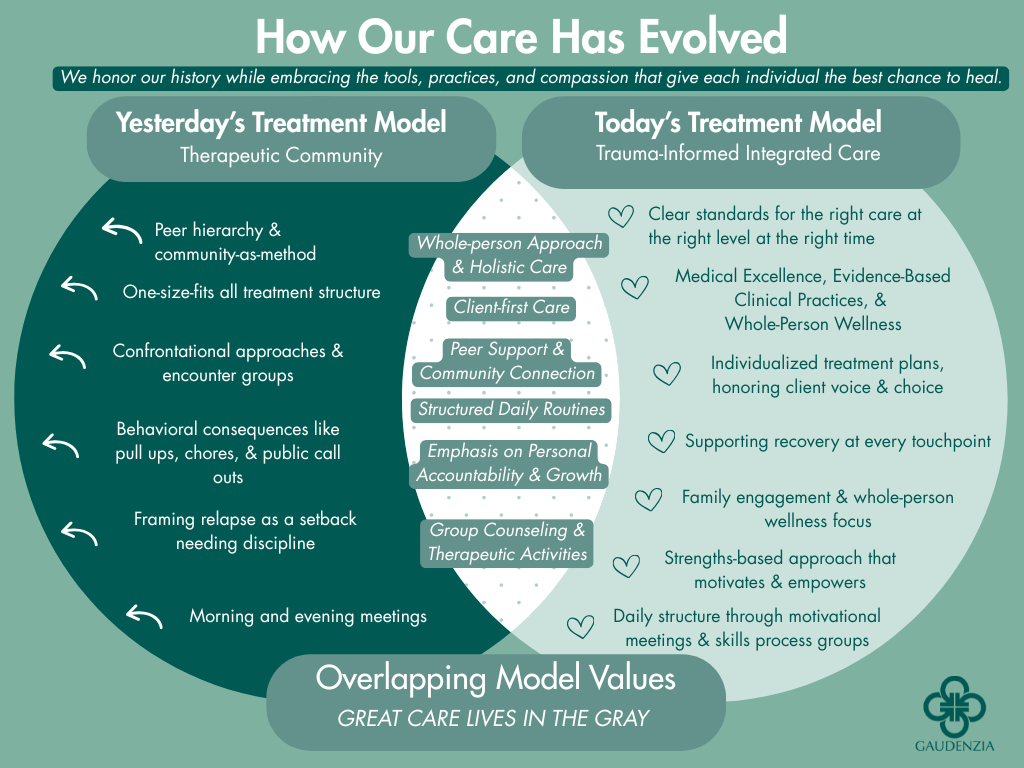
The Therapeutic Community (TC) model laid the foundation for much of today’s recovery work, emphasizing peer support, accountability, structure, and community. These principles remain essential. At the same time, our understanding of trauma, brain development, and behavior has evolved.
Today, Gaudenzia builds upon the strengths of the TC model through a trauma-informed, evidence-based, and research-driven approach that reflects modern clinical knowledge and medical innovation. Structure, consistency, and accountability remain important—not as ends in themselves, but as pathways to skill development, regulation, and long-term recovery.
By integrating medical advances, including MAT, with clinical expertise and recovery support, we balance community and connection with individualized care. Our goal is to bridge tradition with innovation—honoring where we came from while meeting the complex realities of today.
Who This Model Is For
- Individuals and families seeking comprehensive recovery support
- Community and healthcare partners
- Funders, policymakers, and system leaders
- Clinicians, medical professionals, and recovery support specialists
This model reflects how Gaudenzia operates every day—across programs, regions, and disciplines.
Explore Care at Gaudenzia
Explore Our Programs & Locations – Locations – Gaudenzia