The Economics Are Changing Faster Than Our Organizations: Takeaways from Dr. Deja Gilbert’s PACHC 2026 Session

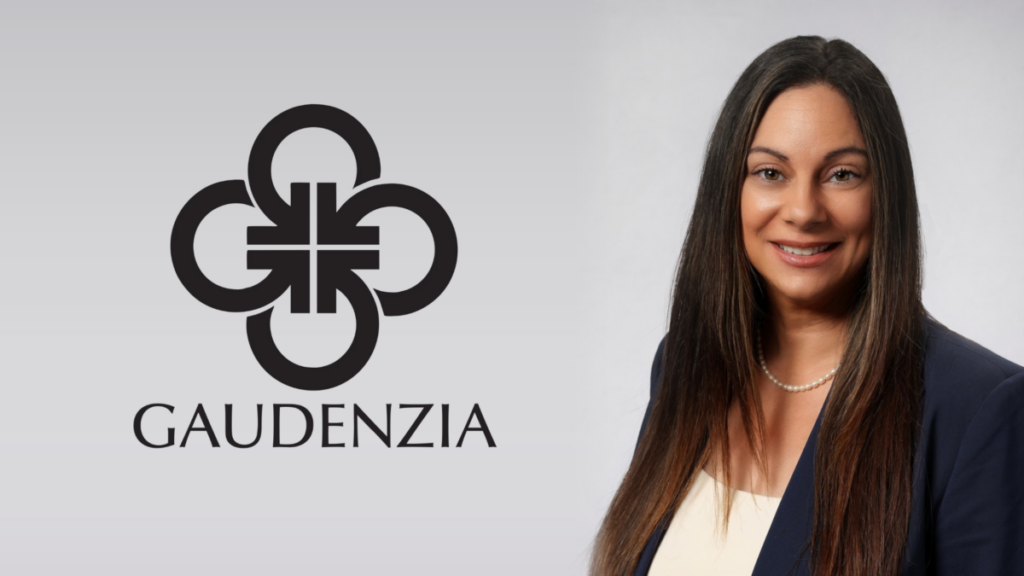
Dr. Gilbert President & CEO of Gaudenzia pictured alongside Gaudenzia logo
Table of Contents

On October 15, 2026, Gaudenzia President and CEO Dr. Deja Gilbert presented “When the Economics Change Faster Than the Organization” at the 2026 PACHC Annual Conference and Clinical Summit in Lancaster, Pennsylvania. The room was full of community health center CEOs, CFOs, and clinical directors, and her opening message was simple: this was not a behavioral health talk. It was a talk about safety-net economics.

What hit behavioral health providers first is now arriving at primary care’s door. Same forces, same sequence, different timeline. Dr. Gilbert shared what Gaudenzia learned by restructuring the entire organization while continuing to serve 16,000+ people each year across Pennsylvania, Maryland, Delaware, and Washington, D.C.

The Funding Cascade Reaches Everyone

Federal Medicaid cuts are projected at $664 billion over the next decade, with 11.8 million people expected to lose coverage. Those reductions don’t stay in Medicaid. They move from federal to state, from state to county, and eventually to commercial payers, who respond to rising utilization with tighter authorization, shorter approved stays, and more denials.

“Commercial payers are not a hedge against Medicaid cuts. They are the second-order effect of Medicaid cuts.”

For health centers, the vocabulary is different (340B pressure, redetermination losses, look-alike funding uncertainty), but the math is the same.

Structure Breaks Before Strategy Does

Most organizations are built around funding streams or service lines. That works when every stream is solvent. When one contracts, every cut becomes existential to the person who owns that silo, and nobody is thinking about the whole.
Dr. Gilbert was clear that this is a design problem, not a people problem:

“If six people in the same role have the same problem, it’s not six performance issues. It’s a design flaw.”

At Gaudenzia, that meant moving from a level-of-care model to a regional model, where leaders own every program in their area and can move resources, staffing, and census across programs when pressure hits.

Cut to Invest, Not Cut to Survive

Incremental cuts feel safer, but they only buy time. Gaudenzia’s approach was surgical: evaluate each program on its own trajectory, convert or close what couldn’t sustain itself, and invest in programs with strong census and payer relationships. Before raising the bar, the team invested in training, data access, and support, so staff were equipped to succeed before being held accountable.
“Restructuring when you have margin is a choice. Restructuring when you don’t have margin is a crisis.”

One Safety Net, Solved Together

Community health centers and behavioral health providers serve many of the same people, often at the same moment in their lives. When one part of the safety net contracts, the other feels it right away. Sharing what we’ve learned, including what was hard, is part of how that safety net holds.
 
Thank you to the Pennsylvania Association of Community Health Centers for the invitation, and to every leader who stayed for the Q&A.

Get the White Paper

Dr. Gilbert’s session was built on her white paper, Beginning Change Management and Organizational Turnaround in Behavioral Health. It goes deeper on the economic analysis, the restructuring framework, and the decisions behind Gaudenzia’s transformation.

Leaders working through a similar restructuring are welcome to connect with Dr. Gilbert on LinkedIn.

Media representatives seeking interviews or additional information may contact publicrelations@gaudenzia.org.
If you or someone you love needs help with treatment for alcohol and/or substance use disorder, please contact our Treatment and Referral HelpLine at 833.976.HELP (4357) or email helpline@gaudenzia.org.
Table of Contents
Join our Mailing List